About the author: Jannice Newson was formerly a coordinator with Elevated Chicago and currently manages the organization’s TikTok account.
This guest blog is part of Elevated Chicago’s ongoing effort to share perspectives from partners advancing equitable transit-oriented development across the region. The views expressed are those of the author(s) and reflect their experiences and expertise. Read more Elevated Chicago guest blogs.
When I joined Elevated Chicago in 2022, I did not know what “development” meant. Acronyms flew through meetings like common verbs, and I was often trying to catch up. Still, joining the organization at that moment felt like getting drafted to the Jordan-era Chicago Bulls. Groundbreakings, ribbon cuttings, and national awards were coming one after another, and I quickly realized I had stepped into something special.
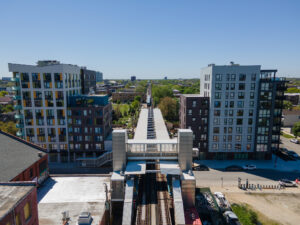
Those wins were built on years of work within the Elevated Chicago coalition. One example is the Lucy Parsons Gonzalez Apartments, a multi-year effort to secure affordable housing in Logan Square. Seeing that project take shape showed me that people’s hopes for a better city must be met with meaningful action. Equitable transit-oriented development (ETOD) is rooted in ordinary human needs: the desire to get around easily, to live near transit, and to afford a home close to daily necessities like groceries and schools. These goals are not radical, yet the barriers to achieving them can be immense. Elevated Chicago stepped in to help change how development happens around transit, and it has been powerful to witness the results of so many people’s labor.
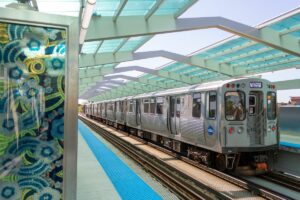
Managing Elevated Chicago’s TikTok account gave me another lens on development and transit—one shaped directly by the public. If you want unfiltered opinions about Chicago transit, post a single video about the CTA. Some people refuse to use the system entirely, while others, like me, rely on it every day. Even those who depend on transit are often deeply critical of it. During the push to fund transit and avoid major service cuts, TikTok made it clear just how frustrated people are with the current state of public transportation.
Those feelings matter because they directly shape how people view ETOD. It is difficult to talk about creating vibrant, walkable communities around stations that feel neglected or unreliable. As ETOD has expanded, transit has not always kept pace—and in some cases, conditions have worsened. With $1.5 billion now allocated to CTA, Metra, and Pace, I am hopeful that long-overdue improvements will make ETOD feel more achievable to more people. Perceptions of ETOD are closely tied to perceptions of transit itself.
Running social media has also shown me what people want from development in their neighborhoods: affordability, transparency, and mobility. People want to understand how a project will affect their bus stop, grocery store, or daily commute—not just how it fits into a planning diagram.
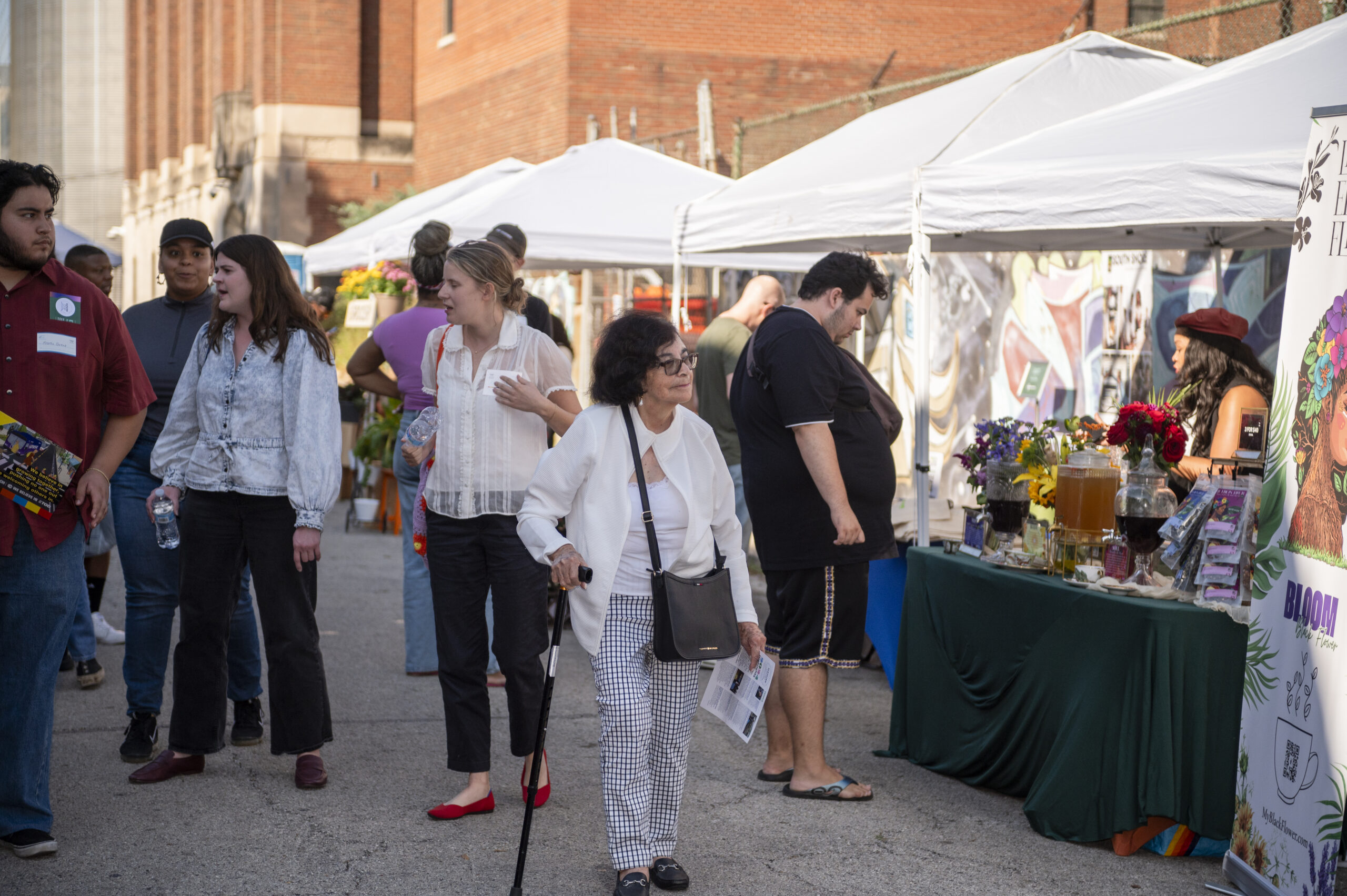
Keeping people engaged means meeting them where they already are. Social media can be a powerful entry point. A funny TikTok might not look like civic education, but it opens the door. My approach is simple: laugh, then learn, then take action. Someone might come for a joke about ghost buses and stay long enough to sign a letter, attend a community meeting, or participate more fully in their neighborhood.
This work has taught me that people care deeply about their communities—they just need accessible, inviting ways to take part in shaping them.