About the author: Kate Ansorge is Vice President of Real Estate Solutions at IFF and served on the core planning team for the Elevated Works program.
This guest blog is part of Elevated Chicago’s ongoing effort to share perspectives from partners advancing equitable transit-oriented development across the region. The views expressed are those of the author(s) and reflect their experiences and expertise. Read more Elevated Chicago guest blogs.
As a nonprofit developer, lender, and real estate consultant, IFF works to expand equitable access to capital, real estate solutions, and development tools to strengthen the nonprofit ecosystem and help narrow the racial wealth gap. Leading the Elevated Works technical assistance program gave me a rare opportunity to see how those goals play out in practice—and where systems still fall short for emerging developers working in under-resourced communities.
Through Elevated Works, IFF served as both a core planning partner and a real estate technical assistance provider, supporting a pipeline of 29 equitable transit-oriented development (ETOD) projects across Chicago. Holding these dual roles created a powerful learning environment. On one hand, we worked directly with developers navigating site control, predevelopment, and capital readiness. On the other, we were able to observe patterns across projects that revealed where processes, policies, and expectations consistently created friction.
One of the most important lessons I gained was that emerging developers do not lack vision or commitment. What they often lack is access to clear, timely, and consistent information. Across the ETOD pipeline, projects stalled not because of weak ideas but because of opaque approval processes, misaligned timelines, and the cumulative burden of navigating multiple public systems at once. Technical assistance, I learned, is as much about translation and navigation as it is about expertise.
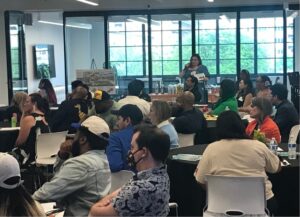
Regular check-ins and project coaching allowed us to meet developers where they were and understand how projects evolved over time. Seeing projects at different stages side by side made it clear that development readiness is not linear. Progress depends on momentum, trust, and the ability to respond quickly when obstacles arise. This reinforced the value of sustained, relationship-based support rather than one-time interventions.
Perhaps the most impactful insight from Elevated Works was the importance of connecting individual project challenges to system-level change. By documenting recurring barriers across the ETOD pipeline, we were able to elevate those insights to the City of Chicago and help inform Cut the Tape, a set of recommendations focused on streamlining development processes and increasing transparency. This experience affirmed that technical assistance programs can—and should—serve as feedback loops that improve the systems shaping development outcomes.
Running Elevated Works also deepened my understanding of trust as a core ingredient in equitable development. Developers were candid about challenges because the program created space for honesty without fear of penalty. That trust enabled IFF to act as both partner and advocate, translating lived development experiences into actionable insights for policymakers.
Ultimately, Elevated Works reinforced my belief that equitable development requires more than funding or policy change alone. It requires proximity to community-led projects, a willingness to listen and learn, and the discipline to translate lessons from the field into structural improvements. Supporting emerging developers is not just about advancing individual projects—it is about building a more resilient, inclusive development ecosystem for Chicago.